Emergency & Disaster Response Communication Systems
We Design, supply, install and integrate emergency & disaster response communication systems—IP intercom, mass notification, PA, control room integration and multi-channel alerts—for residences, campuses, industries, hospitals, data centres and government facilities across India.When an emergency strikes—fire, medical incident, security threat, equipment failure, flood, earthquake, chemical leak or crowd panic—communication becomes the first response tool. An Emergency & Disaster Response Communication System (EDRCS) is an integrated set of intercom, public address, mass notification and command-and-control communications that enables people to raise alarms instantly, helps responders coordinate quickly, and keeps occupants informed with clear instructions.

Why it matters in India?
India’s environments are diverse—high-rise societies, dense commercial hubs, remote industrial zones and mission-critical government setups. Emergencies also vary widely. A well-designed system ensures:
- Instant escalation to security/control room and designated response teams
- Clear instructions to occupants.
- Reduced panic via guided evacuation and verified information.
- Coordinated response across security, facility, EHS, fire wardens and management.
- Evidence and accountability with call logs, recordings and incident reports.
Industries We Serve

Small Apartment / Duplex / Bungalow

Residential Complex, Townships

Malls, Retail & Large Public Buildings

IT Parks & Corporate Campuses

Data Centres
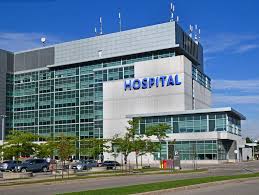
Hospitals & Healthcare

Factories & Industries

Government
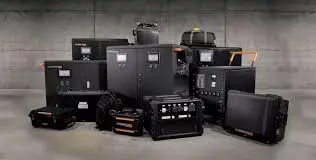
What is an Emergency & Disaster Response Communication System?
An EDRCS is a unified platform that connects:
- Emergency calling (panic call points, help points, intercoms)
- Real-time announcements (IP speakers, horns, strobes, PA zones)
- Multi-channel alerts (mobile app/SMS/email/desktop pop-ups, voice calls)
- Control room operations (operator consoles, event workflows, recordings)
- Integrations (CCTV, access control, fire alarm, IBMS, elevators, gates)
The outcome: faster detection → faster decision → faster response → safer evacuation and recovery.
Key Components of an Emergency & Disaster Response Communication System
IP/SIP Intercom & Emergency Call Stations
- One-touch SOS / emergency button stations.
- Video intercom stations where identification is required.
- Two-way hands-free communication with noise-cancellation and high clarity.
Mass Notification & Public Address
- Network speakers, horn speakers, strobe speakers and siren strobes.
- Zone-based announcements: building-wise, floor-wise, block-wise.
- Pre-recorded emergency messages + live paging.
Control Room / Operator Console Software
- Central dashboard for receiving calls, alarms and events.
- Audio/video pop-up on emergency call.
- Recording, audit trail, incident tagging and reporting.
Multi-Channel Alerting
- SMS, email, app notifications and desktop alerts.
- Auto dial-out / voice call notifications to key personnel.
- Templates for different emergencies.
Integration with Safety & Security Systems
- IP CCTV / VMS (camera view pops up with the emergency call)
- Access Control (unlock emergency exits, control muster routes)
- Fire Alarm / FACP (automated evacuation announcements by zone)
Network, Power & Redundancy
- PoE switches, industrial-grade networking where needed.
- UPS-backed power, redundant links, failover configurations.
- On-prem server or hybrid architecture.
Field Mobility for Response Teams
- Mobile client apps / rugged devices for floor marshals, EHS and security.
- Push-to-talk groups for teams.
- Real-time coordination during drills and live incidents.
ACE Technologies delivery scope
1
Design & Engineering
Site survey, risk mapping, zoning plan and message strategy.
2
Supply, Installation
Intercom stations, IP speakers/horns/strobes, operator consoles.
3
Training, AMC & Expansion
Scalable growth across blocks/buildings/sites.
Benefits of Time & Attendance System

Small Apartment / Duplex / Bungalow
- Panic button/intercom at gate, parking and staircases.
- Quick call routing to guards and RWAs.
- Visitor & delivery incident escalation.

Residential Complex, Townships
- Zone-wise announcements (tower/block/amenities).
- Help points across common areas and perimeter.
- Event-driven workflows (lost child, fire)

Malls, Retail & Large Public Buildings
- Security + facility coordination during fire/evacuation/lockdown.
- Incident recordings and reports for compliance and insurance support.

IT Parks & Corporate Campuses
- Unified emergency calling + mass notification across multiple buildings.
- SOP templates for fire, medical, bomb threat, active threat, weather events.

Data Centres
- Emergency communication for restricted areas, MEP rooms and yards.
- Integration with SOC/NOC, access control, CCTV and IBMS for rapid verification.
Hospitals & Healthcare
- Emergency alerts without panic: controlled zone announcements.
- Clear communication during evacuation, fire, oxygen/gas alarms and crowd issues.

Factories & Industries
- High-SPL horn speakers and strobe alerts for noisy environments.
- Help points in production bays, warehouses, ETP/STP, boiler areas, yards.

Government
- Integration across surveillance, entry systems, emergency alarms and PA.
- Policy-aligned deployment (on-prem/hybrid), audit trails and access control.
Frequently asked questions
The system is designed to manage a wide range of emergencies including fire, medical incidents, security threats, equipment failure, chemical/gas leaks, natural disasters, crowd panic, and lockdown situations. Each scenario can have predefined workflows, messages, and escalation rules for faster response.
Yes. ACE Technologies designs EDR systems with UPS-backed power, redundant networking, and failover architecture. Critical components such as intercoms, speakers, and control room systems remain operational during power outages, ensuring communication continuity.
Absolutely. The system supports zone-wise and group-wise communication (floor, block, building, or area). This allows precise announcements avoiding panic and ensuring only affected zones receive instructions.
Yes. Emergency communication becomes more effective when integrated with CCTV/VMS, access control, fire alarm panels (FACP), elevators, and IBMS. For example, cameras can pop up automatically on emergency calls, exits can unlock, and evacuation messages can trigger automatically.